English
 Germany

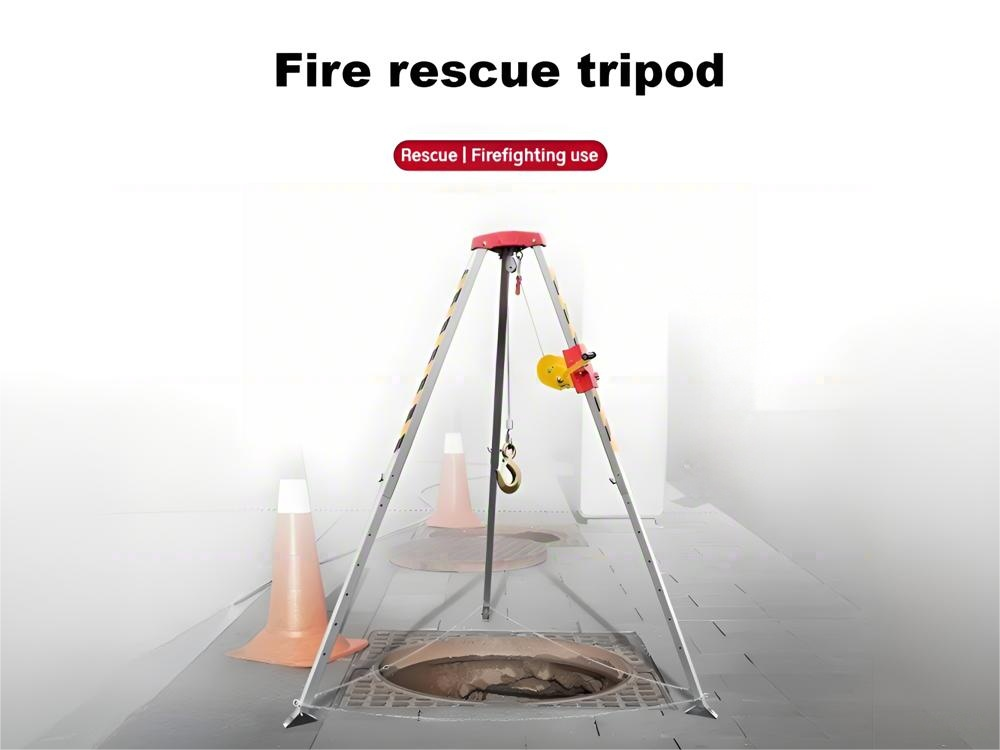

From Simple Frames to a Foundation of Safety
The development of traditional mechanical rescue tripods is a history of safety equipment that has evolved alongside the ever-growing needs of human industry and rescue operations. Its history can be roughly divided into several key stages:
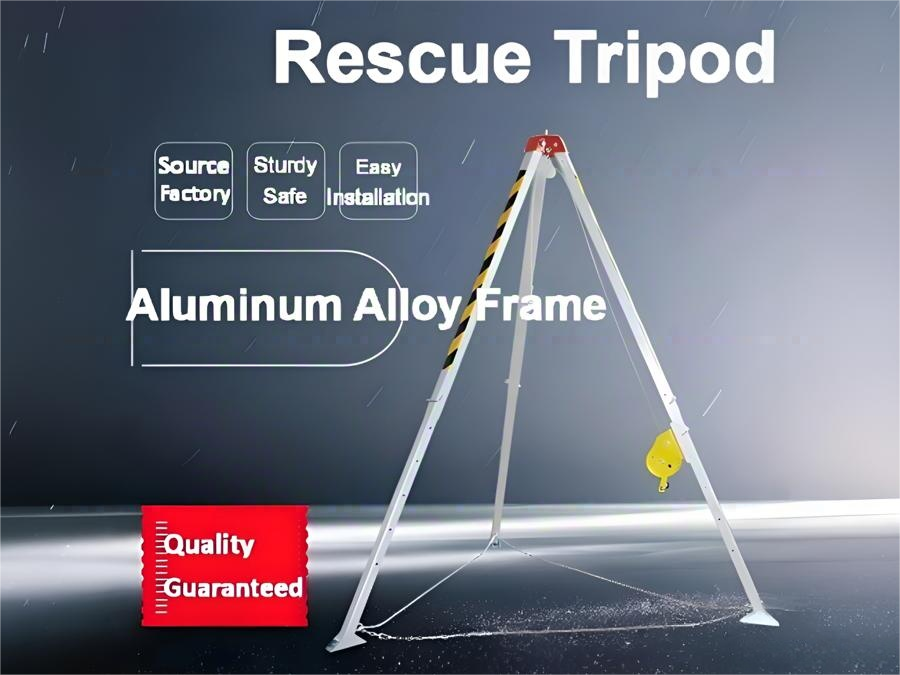
Early Prototypes and Industrial Applications (Early 20th Century): The initial concept of tripods originated from simple supports used in construction and mining industries to suspend pulleys or provide temporary support. Materials were mostly wood or heavy iron structures; the designs were crude, with poor safety and portability, but they already possessed basic vertical work capabilities.
Specialization and Military Drive (Mid-20th Century): World War II and the post-war period, the need for rapid and effective battlefield rescue and ship and aircraft maintenance spurred the design of lighter, more robust metal tripods. The use of materials such as aluminum alloys greatly increased their portability. During this period, tripods began to transform from general-purpose tools into specialized equipment for confined space rescue and work at heights, establishing the modern form with adjustable legs, top pulley systems, and safety anchor points.
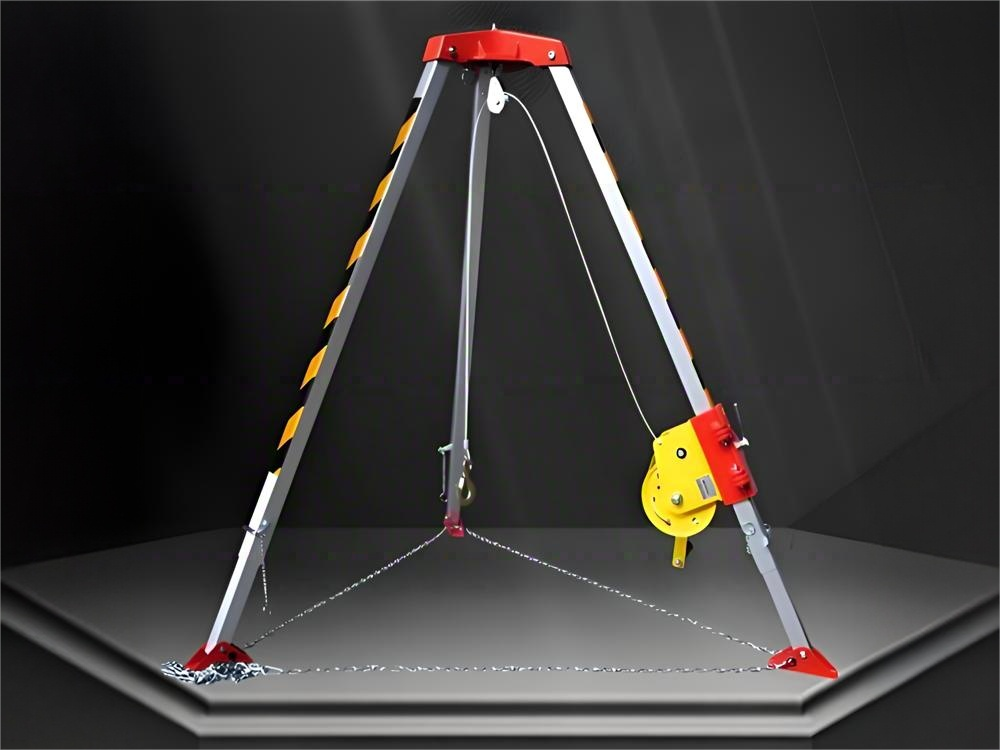
The Era of Standardization and Safety Regulations (1970s-1990s): With the acceleration of global industrialization, safety regulations became increasingly stringent (such as the establishment of OSHA standards). The design, manufacture, and testing of rescue tripods experienced a wave of standardization. Load ratings (such as the 272 kg standard), locking mechanisms, leg tube markings, and material certifications became mandatory requirements. Their role was clearly defined as a critical anchor point device in "fall protection systems" or "rescue systems," with reliability becoming a core pursuit.
Maturity and Lean Manufacturing (21st Century to Present): Entering the new century, traditional tripod design has reached a high level of maturity. Development focuses on ergonomic optimization (lighter weight, faster deployment speed), detailed improvements (anti-pinch design, wear-resistant coatings, modular accessories), and broader material certification (such as corrosion-resistant treatments to withstand chemical environments). Despite the trend towards intelligentization, their value as a reliable "last line of defense" requiring no electricity has been reaffirmed, and they remain standard equipment in fire protection, municipal, utility, and industrial maintenance sectors.
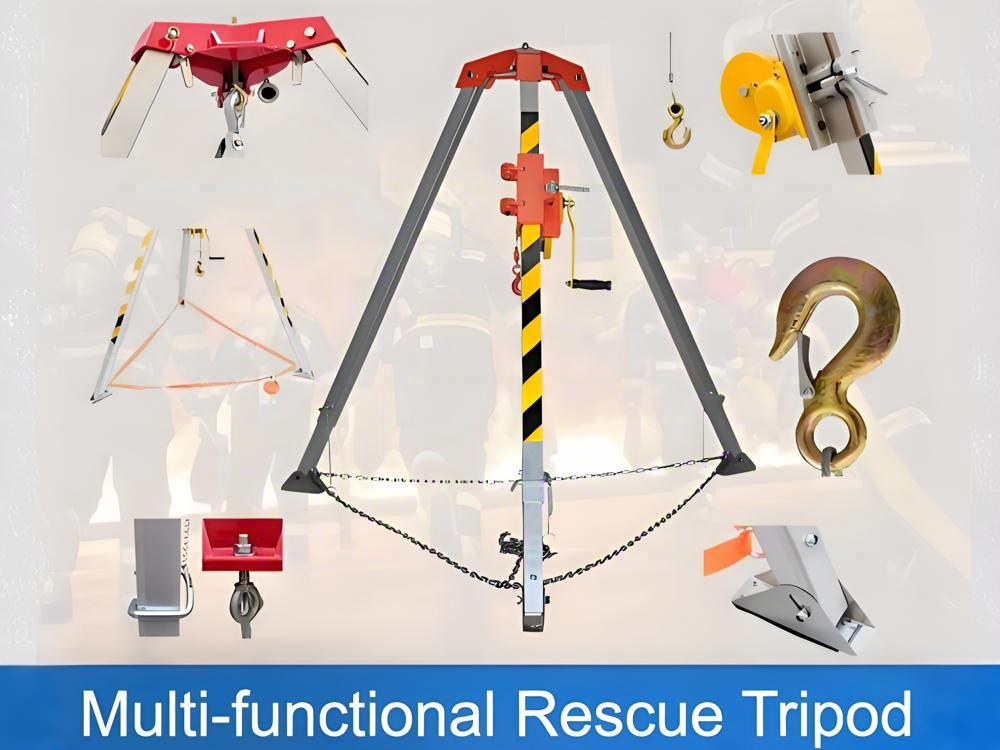
This process demonstrates that the evolution of traditional rescue tripods has always revolved around the core objectives of "safer, more efficient, and more reliable," evolving from a simple tool into a well-thought-out safety system.